For retail traders entering crypto markets, following experienced Lead Traders on BuddyTrading offers a powerful shortcut to success. But relying on a single strategy or trader? That’s risky. To maximize returns and manage risk, you need a balanced portfolio across multiple traders and approaches.
This guide shows how to structure your investments across different Lead Traders for better long-term results.
1. Don’t Put All Your Funds into One Trader
While it might be tempting to follow the top trader on the leaderboard and go all-in, this approach is risky. Even experienced traders have bad weeks. If your entire capital is tied to just one strategy, you’re fully exposed to that individual’s decisions.
How to do it:
Choose at least 3 traders with different strategies.
Allocate based on your goals: Are you aiming for steady passive income or aggressive growth?
Example:
Trader A (low-risk, spot trading): 50%
Trader B (medium-risk, swing trading): 30%
Trader C (high-risk, futures): 20%
2. Allocate Based on Risk Appetite
Each Lead Trader on BuddyTrading comes with a performance history and often, a visible trading pattern. Don’t just look at one number - analyze the full picture.
What to check:
Win rate: Consistency matters more than spikes.
Drawdown: This shows how much value a trader typically loses before recovering. Lower drawdowns (<10%) usually mean better risk management.
Trading frequency: Active traders generate more data, which can help you assess consistency.
Strategy type: Are they trend-followers, scalpers, or swing traders?
From there, allocate more capital to consistent, lower-risk traders, and smaller portions to high-risk, high-reward strategies.
Example Allocation:
60% to a low-risk, steady ROI trader
30% to a moderate-risk, medium-return strategy
10% to a high-risk trader with aggressive growth
As performance changes, your portfolio balance will shift naturally. One trader might outperform, while another may slow down or hit a rough patch. Set time every week (or bi-weekly) to review, compare and adjust allocations as needed to maintain balance.
3. Diversify by Strategy Type and Market Conditions
One of the biggest mistakes new retail traders make is following several Lead Traders who, on the surface, appear different - but in reality, are using nearly identical strategies. If all your followed traders rely on the same technical signals, trade the same market pairs, or operate within the same timeframe, your portfolio becomes more vulnerable than it looks. During certain market conditions (like a sudden BTC dump), they may all make the same losing moves, leading to a synchronized drawdown.
To avoid this, diversify your trading across truly different strategy profiles:
Strategy type: Mix scalpers (fast trades, small profits), swing traders (longer holds based on trends), and automated/grid strategies that work in sideways markets.
Market focus: Choose traders who specialize in different assets - for example, one who focuses on BTC, another on ETH or top altcoins, and a third who trades stablecoin pairs or DeFi tokens.
Trading session: Consider time zones. A trader active during U.S. hours may respond differently to news than one who trades the Asian session. This can create natural offsets in your portfolio performance.
By intentionally spreading your exposure, you reduce the chance that a single event or market trend will drag down your entire portfolio, leading to smoother, more resilient performance over time.
Organizing and balancing your trading portfolio isn’t complicated, but it does require intention. With BuddyTrading’s flexible tools and real-time dashboards, you can fine-tune your investments to match your risk tolerance and goals.
Remember: the best retail traders don’t just follow - they manage.

 Our Blog
 3 min read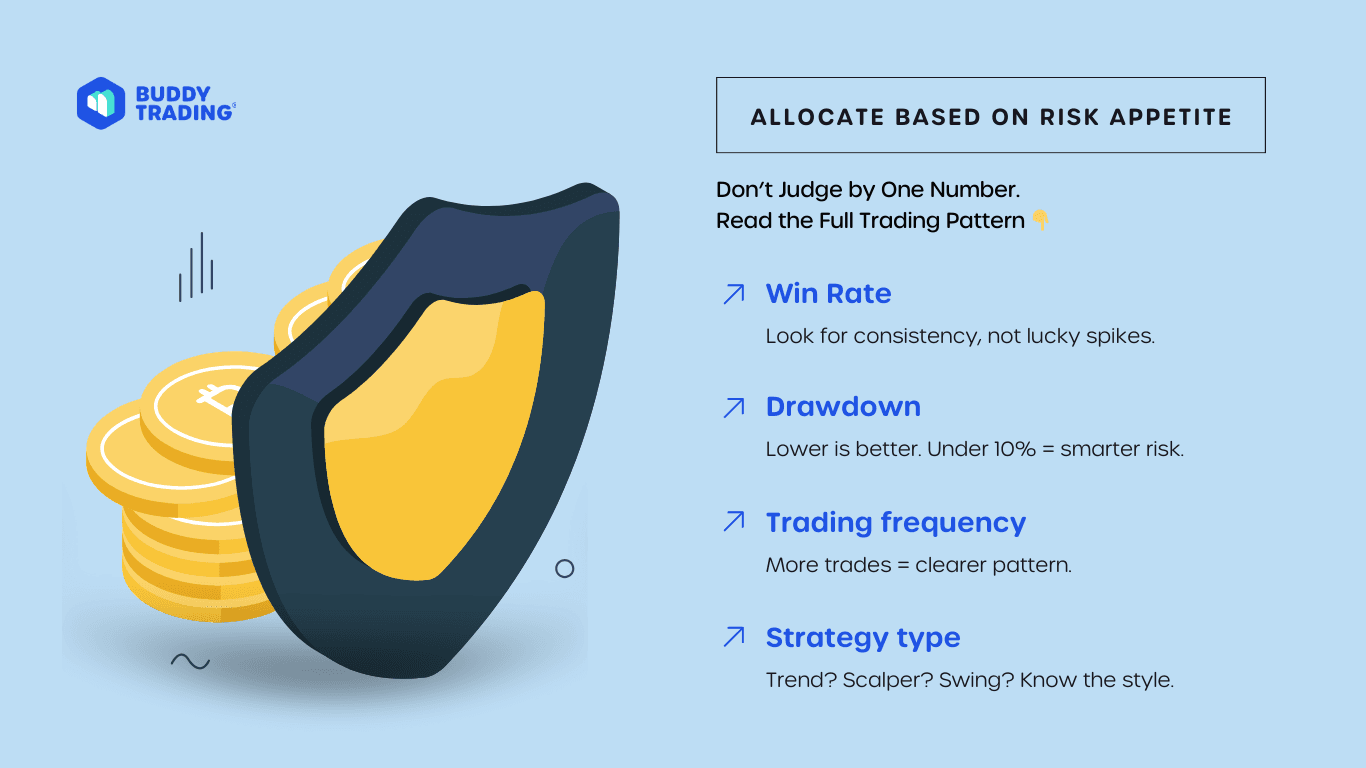

 Jun 29, 2025