A login link has been sent to your inbox. If it doesn't arrive in 3 minutes, be sure to check your spam folder.
 Our Blog
I lost $350 using my first crypto trading bot, and it was all because of 4 simple mistakes. I'm sharing why setting a tiny profit gap just pays the exchange in fees, why "AI-powered" settings are just backward-looking lies, and why you must treat your bot as a human-directed tool, not passive income.

The promise of passive income is what draws most people to crypto trading bots. The idea of automating your trades to capture profits 24/7 is a powerful concept. Like many new investors, I was eager to get started, but my initial ventures proved to be an expensive learning curve, costing me around $350 in cumulative fees, poor trades, and missed opportunities. (still can't accept is dumb-ness)
This experience taught me that a bot is a powerful tool, but it requires strategy, not just luck. Here are four key insights I gained from running my first crypto bot built on the B-exchange (iykyk).
When running an exchange-provided bot, you are often using a Grid Trading Bot. It works by placing a series of buy and sell orders between a price range you define.
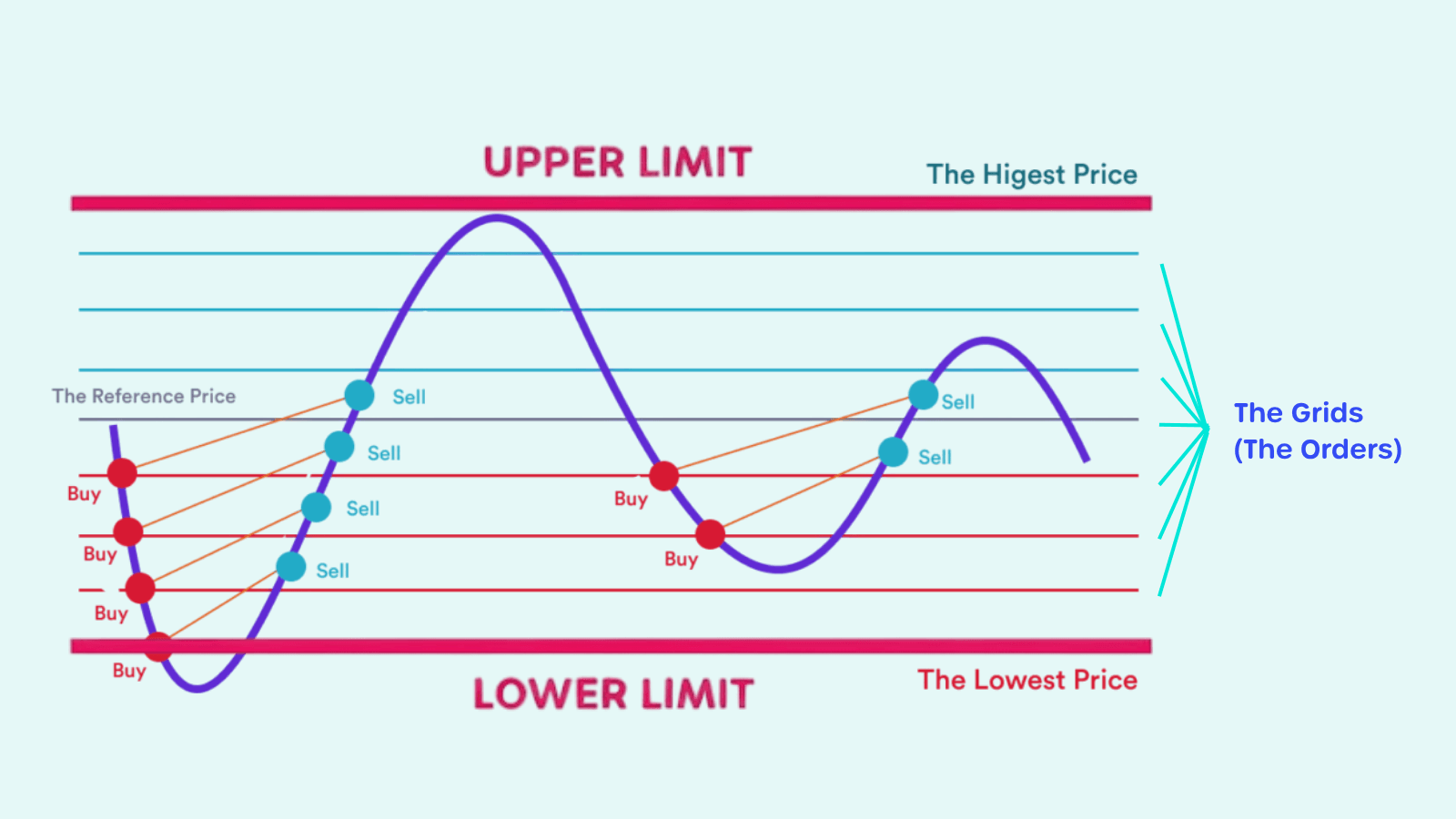
So.. This is my case-
My initial error was setting the profit gap too small (less than 0.3%). For example, in a three-day test, the bot executed 22 trades for a tiny two-cent profit. While technically profitable, the volume of trades meant the exchange collected a fee on every transaction. The bot was highly active, but most of the activity was benefiting the exchange’s trading volume.
Key Insight: Ensure the profit you aim for on each trade is significantly larger than the transaction fee. A wider grid (allowing for bigger profit per trade) helps ensure that the bulk of the activity’s value is captured by your account, not the exchange.
It’s tempting to think of a trading bot as a hands-off, “set-it-and-forget-it” system. However, the bot is merely a program that executes the parameters you provide. It lacks the human ability to evaluate sudden market shifts.
For instance, when my grid was set for a stable, sideways market and the price suddenly broke out (either up or down), the bot went “out of range.” It couldn’t execute new orders until the price returned to its defined limits. This left my capital temporarily inactive or stuck in a losing position.
Key Insight: Bot trading is not purely passive. A bot is best deployed when you anticipate a sideways, volatile market (a “crabbing” market). You must actively monitor the market trend and be ready to manually pause or adjust the bot when a strong, one-directional trend begins.
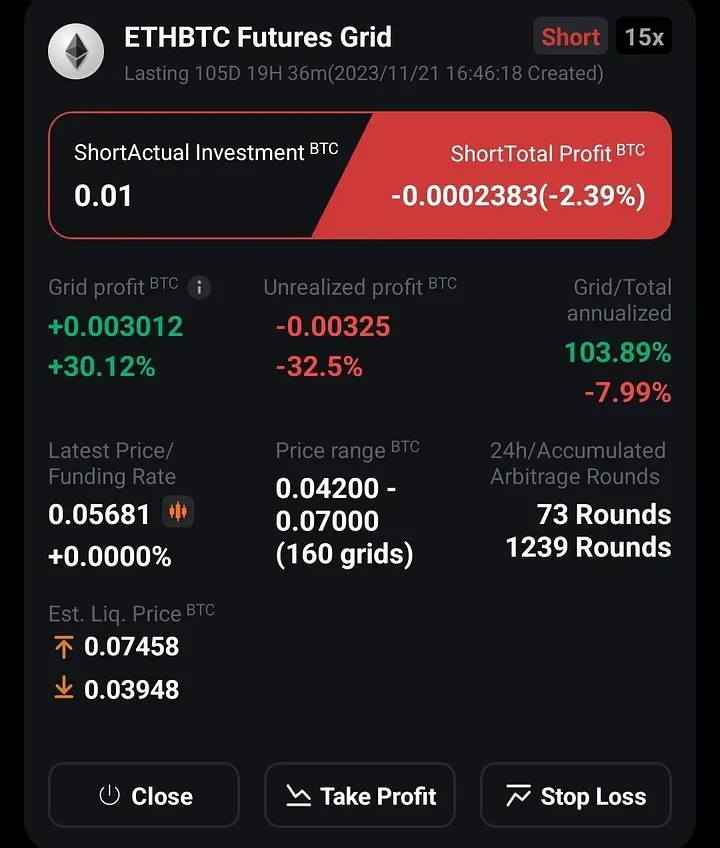
Beside, after nearly 2 years practicing, now I have another bot running, and this screenshot perfectly shows my point: the bot is just following your orders, and it will get into trouble if your main idea about the market direction is wrong.
You can see the Grid Profit is a very healthy +30.12%, which means the bot has been great at buying low and selling high over 1,239 trades. It did exactly what it was programmed to do!
However, because I set a Short strategy (betting the price would go down) and the price likely went up over those 105 days, the Unrealized Profit is deep red at -32.5%. The trades the bot opened are now worth less than the bot paid for them.
This creates a Net Loss (-2.39%) and, critically, shows that the excellent performance of the automated tool is completely canceled out by a failure in the human’s core strategy, the conviction that the asset’s price was going to fall.
Many platforms offer “AI-powered” or “Smart” settings. What this usually means is the system ran a backtest to show you the best-performing settings for a specific, often narrow, period of time in the past.
The danger here is that a backtest run on data from “last week” might have only captured an ideal scenario, a smooth up-and-down movement perfect for a grid. It usually doesn’t show you how that strategy would perform during a sudden crash, a massive pump, or a prolonged calm period. You’re only seeing the best-case performance.
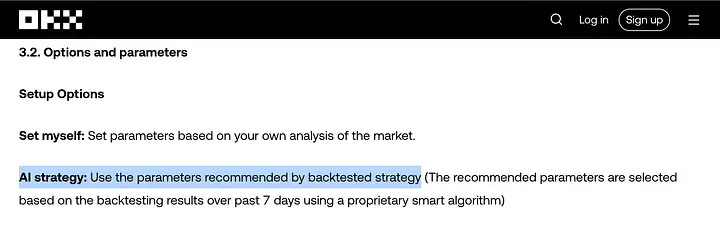 This is OKX’s description on how they defines “AI-Strategy" — IT’S JUST A BACKTESTED STRATEGY
Since major exchanges like Binance don’t offer complex backtesting tools, you need to use dedicated third-party platforms like CryptoHopper, 3commas (Paid) or free tool like BuddyTrading (as seen in the image) to stress-test your strategy. Look closely at the key components of the results:
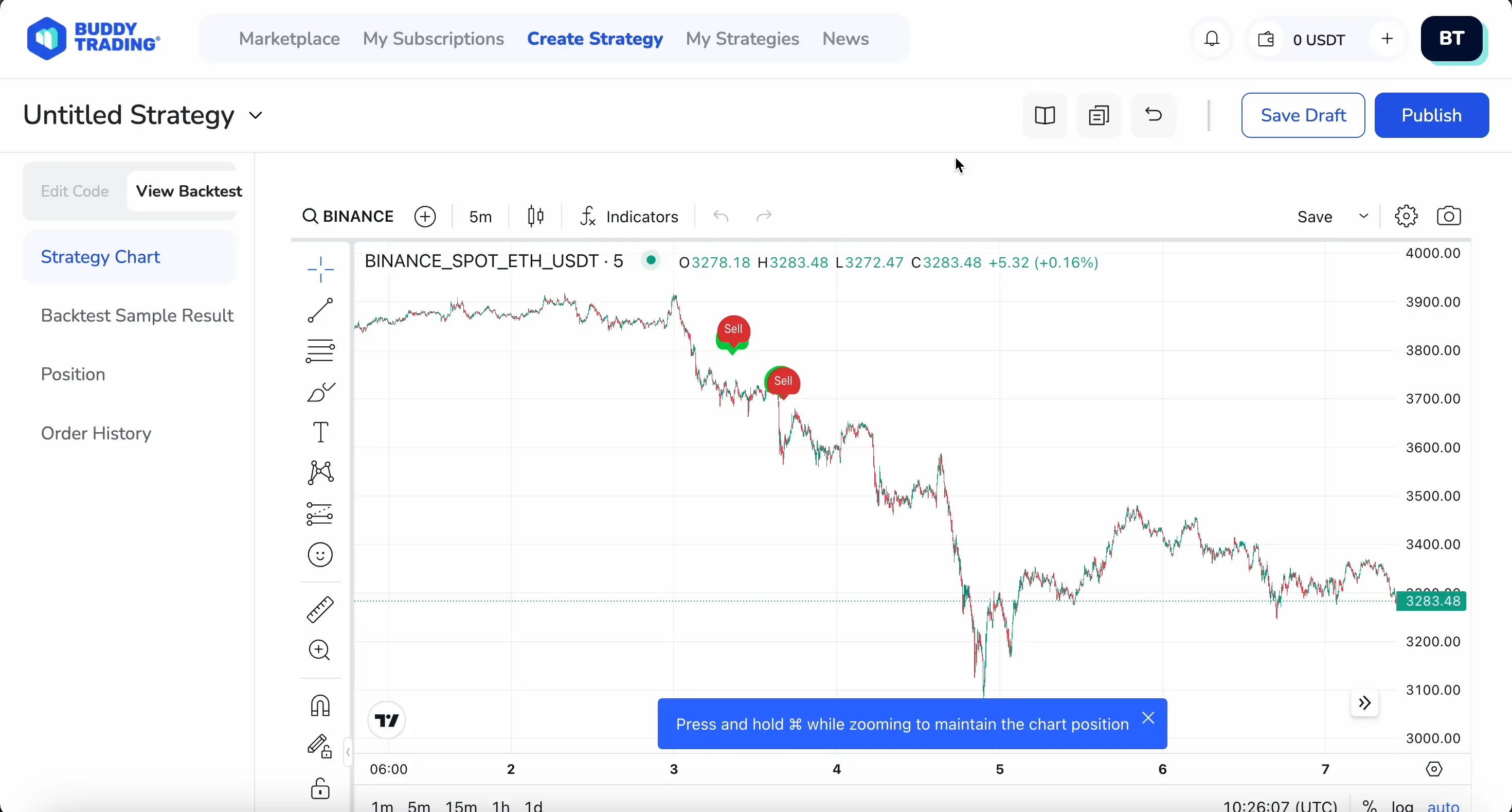
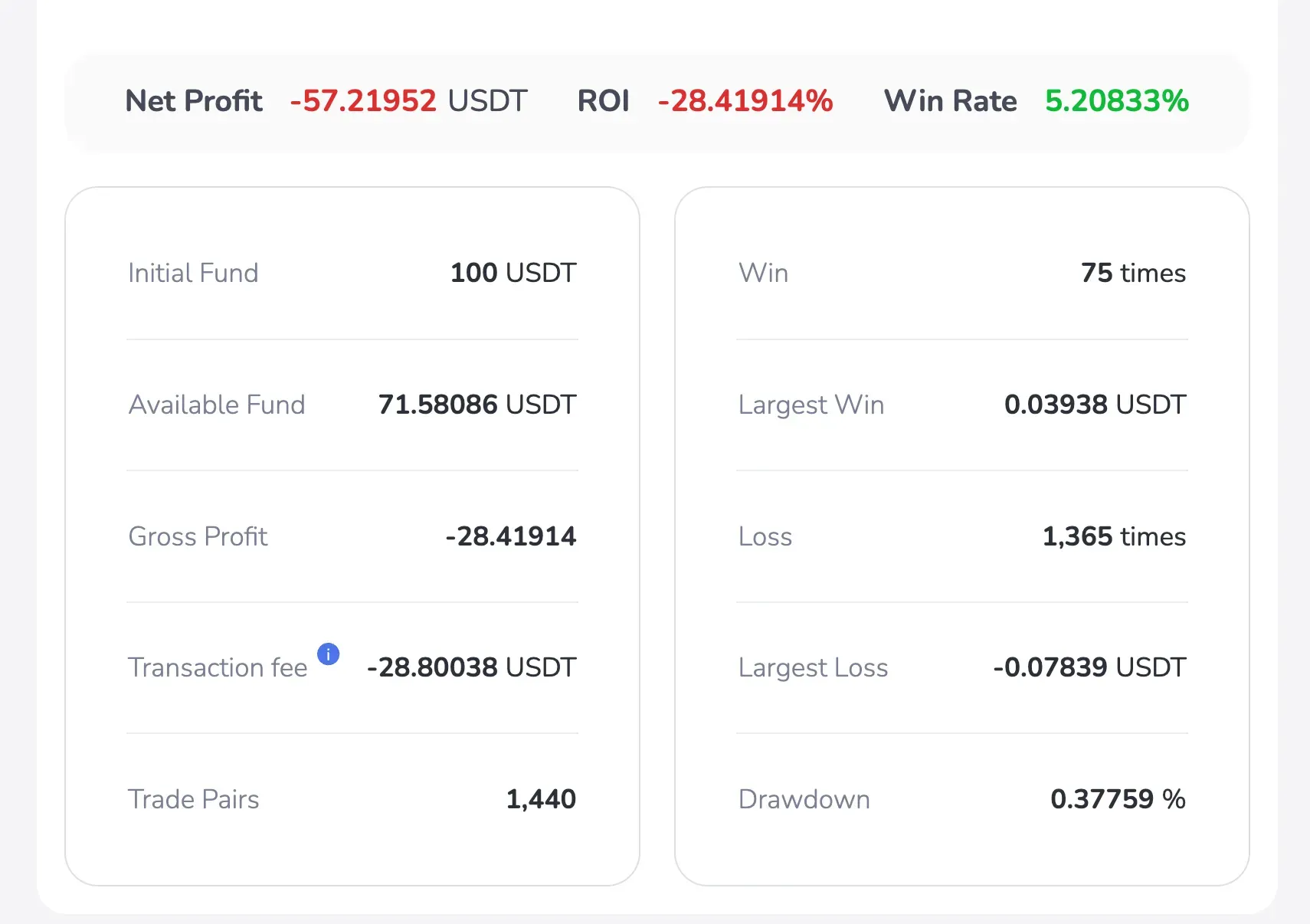
The goal is to test your settings across multiple time ranges (a bull run, a bear market, and a sideways period) to verify they work no matter how the market behaves. Use these detailed metrics to avoid over-optimizing your bot for just one perfect past scenario.
My initial impatience led me to stop bots after just three to five days when I didn’t see huge returns. This stop-and-start approach was a guaranteed way to accumulate small losses and fees without giving any strategy a real chance to gain momentum.
Experienced bot users often emphasize two things: patience and wider parameters. You need to give the bot time (weeks, months, not days) to accumulate small wins. Furthermore, widening the price range of your grid gives the bot more room to trade without getting stuck and ensures the profit per trade is substantial enough to overcome fees.
Key Insight: Avoid setting the range too tightly. Treat the bot as a long-term accumulator. The goal is small, consistent gains over time, not quick, dramatic profits.

Subscribe to our newsletter and be the first to access exclusive content and expert insights.



 6 min read