A login link has been sent to your inbox. If it doesn't arrive in 3 minutes, be sure to check your spam folder.
 Our Blog
Copy trading empowers anyone — from beginner to pro — to participate in the markets by replicating the trades of seasoned professionals. But even the best traders experience losses. That’s where drawdowns come in — and how you manage them can make or break your success as a copy trader. A drawdown refers to the decline from a portfolio’s peak to its lowest point. In copy trading, it’s the moment where confidence is tested, emotions rise, and rash decisions often lead to regret. The key isn’t av
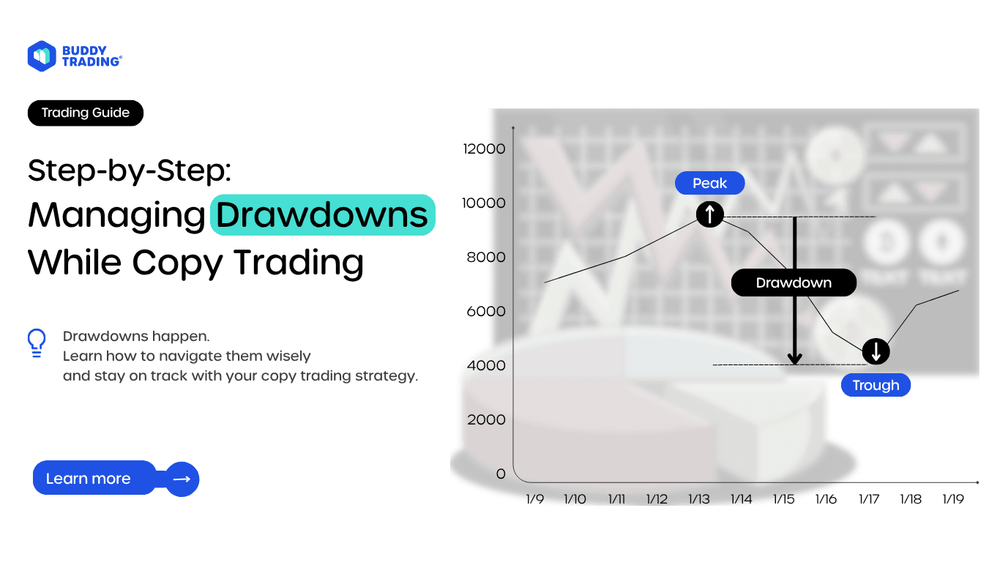
Copy trading empowers anyone — from beginner to pro — to participate in the markets by replicating the trades of seasoned professionals. But even the best traders experience losses. That’s where drawdowns come in — and how you manage them can make or break your success as a copy trader.
A drawdown refers to the decline from a portfolio’s peak to its lowest point. In copy trading, it’s the moment where confidence is tested, emotions rise, and rash decisions often lead to regret. The key isn’t avoiding drawdowns — it’s learning to manage them smartly.
Here’s a step-by-step guide to navigating drawdowns without derailing your copy trading strategy.
Before you act, understand what you're experiencing:
For example: If your copy trading portfolio peaks at $1,000 and drops to $900, your drawdown is 10%.
Key Point: Even elite traders go through drawdowns. What matters is how they (and you) manage it.
Not all traders are the same — and neither are their drawdowns.
Before copying any trader, review:
Platforms like BuddyTrading offer transparent insights into trader stats, allowing you to match with profiles that align with your comfort level.
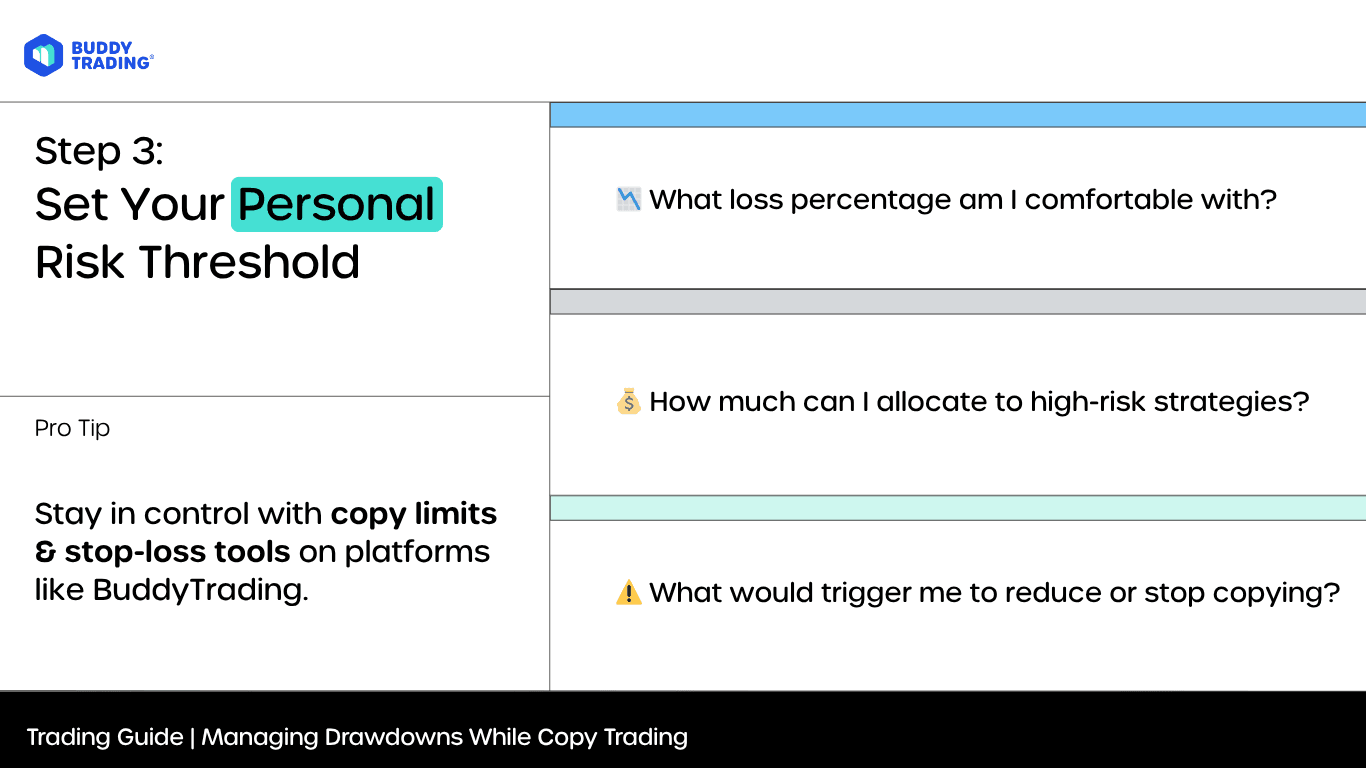
Even if your lead trader is comfortable with a 30% drawdown, you don’t have to be.
Ask yourself:
Pro Tip: Many platforms, including BuddyTrading, allow you to set copy limits, stop-loss thresholds, or allocate only a portion of your portfolio to each trader.
This is where many copy traders go wrong. They:
Instead, use this framework:
Emotional exits often turn temporary losses into permanent ones.
Don’t put all your eggs in one trader.
To reduce drawdown risk:
On BuddyTrading, you can track the performance of each trader independently and rebalance accordingly.
Set regular intervals (e.g., weekly or monthly) to review:
Tools like dashboards, trade logs, and PnL graphs can help you remove emotions and make data-driven decisions.
Step 7: Have an Exit Plan (But Don’t Pull the Trigger Prematurely)
Every copy trade should come with a predefined exit strategy:
Remember, the worst time to exit is often during peak fear. Stick to your plan.
Drawdowns aren't just setbacks — they’re learning opportunities.
Use each drawdown to refine your approach — and you'll become a smarter, more resilient investor.
Drawdowns are part of the game — whether you're a manual trader or a copy trader. But with the right mindset, tools, and preparation, you can navigate them with confidence and come out stronger.
✅ Understand the nature of drawdowns
✅ Match with traders who align with your risk tolerance
✅ Set personal risk limits
✅ Diversify and track performance
✅ Don’t let emotions drive your decisions
✅ Always have an exit plan
Platforms like BuddyTrading give you the insights and tools to copy smarter, not just follow blindly.
📢 Join the BuddyTrading community today!
🌐 Visit us: BuddyTrading.com
🐦 Follow us: @BuddyTradingApp
💬 Stay updated: https://t.me/BuddyTradingApp
🚀 Stay ahead with expert insights & real-time updates!

Subscribe to our newsletter and be the first to access exclusive content and expert insights.

CopyBot vs. CopyHuman: Which mirror trading style is better? Compare execution speed, emotion, and risk. Discover top-tier algorithmic strategies with Buddy Trading today.
 Dec 18, 2025
Learn how to promote your crypto trading bot with social selling from a marketing approach. Use GitHub, Discord, X, Reddit, and BuddyTrading to build trust and monetize strategies
Sep 17, 2025
Learn how we combined manual market analysis with Buddy Trading's AI to build a precision DCA bot. See the case study of a strategy that survived the Jan 2026 dip with a 100% win rate and <0.02% drawdown
Jan 9, 2026

 5 min read