A login link has been sent to your inbox. If it doesn't arrive in 3 minutes, be sure to check your spam folder.
 Our Blog
Copy trading is an excellent way to participate in the market without needing years of experience. However, picking the right trader to follow can make all the difference in your results. Instead of just looking at flashy returns, it’s essential to dig deeper into key performance metrics that indicate long-term success and reliability. 1. Win Rate vs. Risk Management A trader with a high win rate might look appealing, but it’s crucial to assess how they manage risk. Some traders take on exces

Copy trading is an excellent way to participate in the market without needing years of experience. However, picking the right trader to follow can make all the difference in your results. Instead of just looking at flashy returns, it’s essential to dig deeper into key performance metrics that indicate long-term success and reliability.
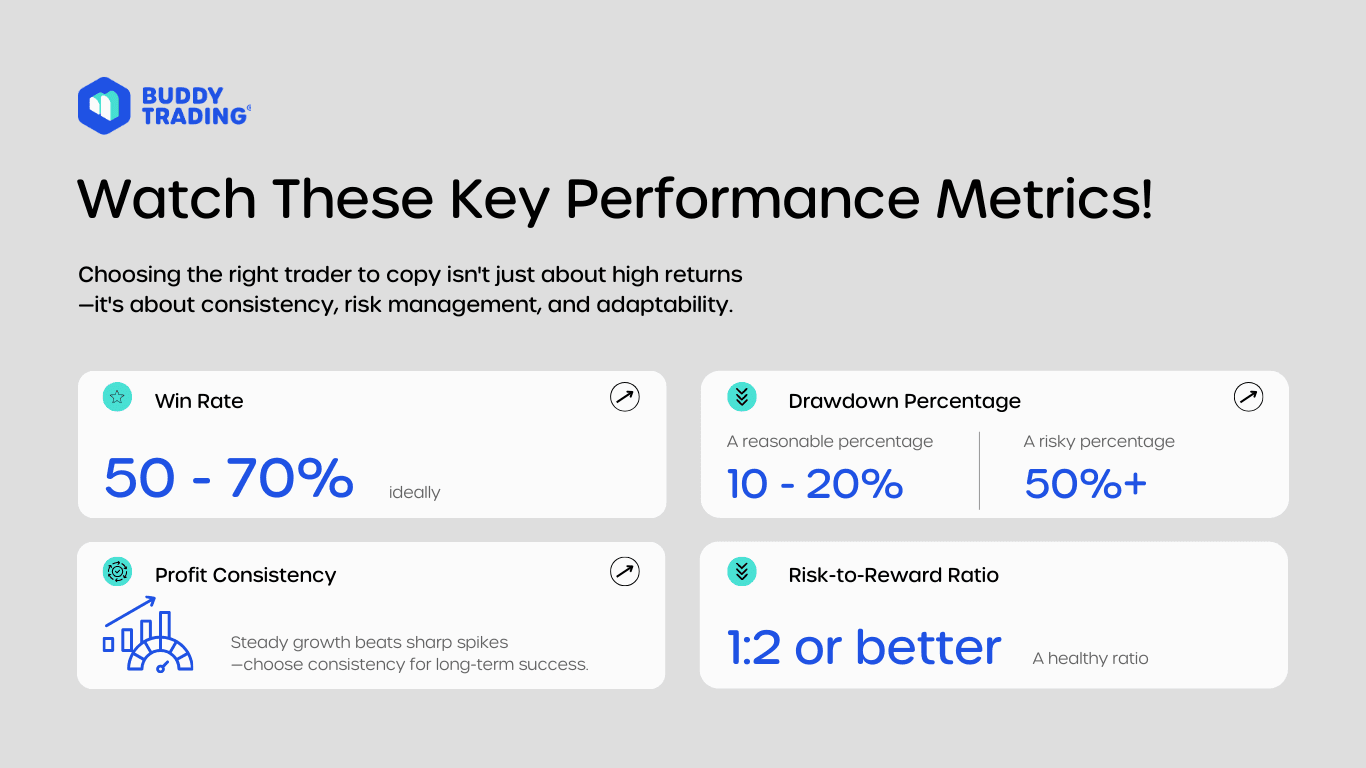
A trader with a high win rate might look appealing, but it’s crucial to assess how they manage risk. Some traders take on excessive leverage or avoid stop losses, leading to occasional massive losses that erase past gains. Look for traders with a balanced approach—consistent wins without reckless risk-taking. A win rate between 50-70% combined with disciplined risk management often indicates a sustainable trading strategy. Additionally, consider how they adjust their risk in different market conditions. A trader who can maintain a solid win rate while keeping losses in check during volatile periods is a strong candidate.
It’s easy to be impressed by a trader who had an explosive month, but consistency is key. Review their performance over several months or even years. A trader with a steady upward curve, rather than sharp spikes followed by crashes, is a better choice for long-term success. Also, analyze their returns relative to the overall market—are they consistently outperforming, or is their success dependent on favorable market conditions? A good copy trader should be able to deliver stable returns in both bullish and bearish environments, showcasing their ability to navigate different market cycles.
Drawdown refers to the biggest drop in a trader’s account balance from its peak. A low drawdown percentage means the trader is good at preserving capital during market downturns. Ideally, you want a trader with a moderate and controlled drawdown rather than one who takes wild risks. For instance, a maximum drawdown of 10-20% is reasonable, whereas anything above 50% suggests a highly aggressive approach that could wipe out an account. Understanding how a trader handles drawdowns—whether they recover quickly or struggle to bounce back—is crucial in assessing their risk management skills.
This metric shows how much risk a trader takes compared to their potential rewards. A healthy risk-to-reward ratio is typically above 1:2, meaning they aim to make at least twice as much as they risk on each trade. If a trader frequently risks large amounts for small gains, it’s a red flag. Examining their average profit versus average loss can reveal whether their strategy is mathematically sustainable over time. Furthermore, traders with a high-risk reward ratio often demonstrate patience, waiting for the right opportunities instead of jumping into every trade impulsively.
Different traders have different strategies—scalping, swing trading, or long-term investing. Choose a trader whose style matches your risk tolerance and time horizon. If you prefer steady growth, avoid traders who make dozens of quick trades daily with high leverage. Additionally, understanding the trader’s approach to market analysis—technical, fundamental, or a combination—can help you align with someone whose methods you trust. Some traders rely heavily on indicators, while others focus on macroeconomic trends or sentiment analysis. Evaluating their methodology can provide insights into their decision-making process.
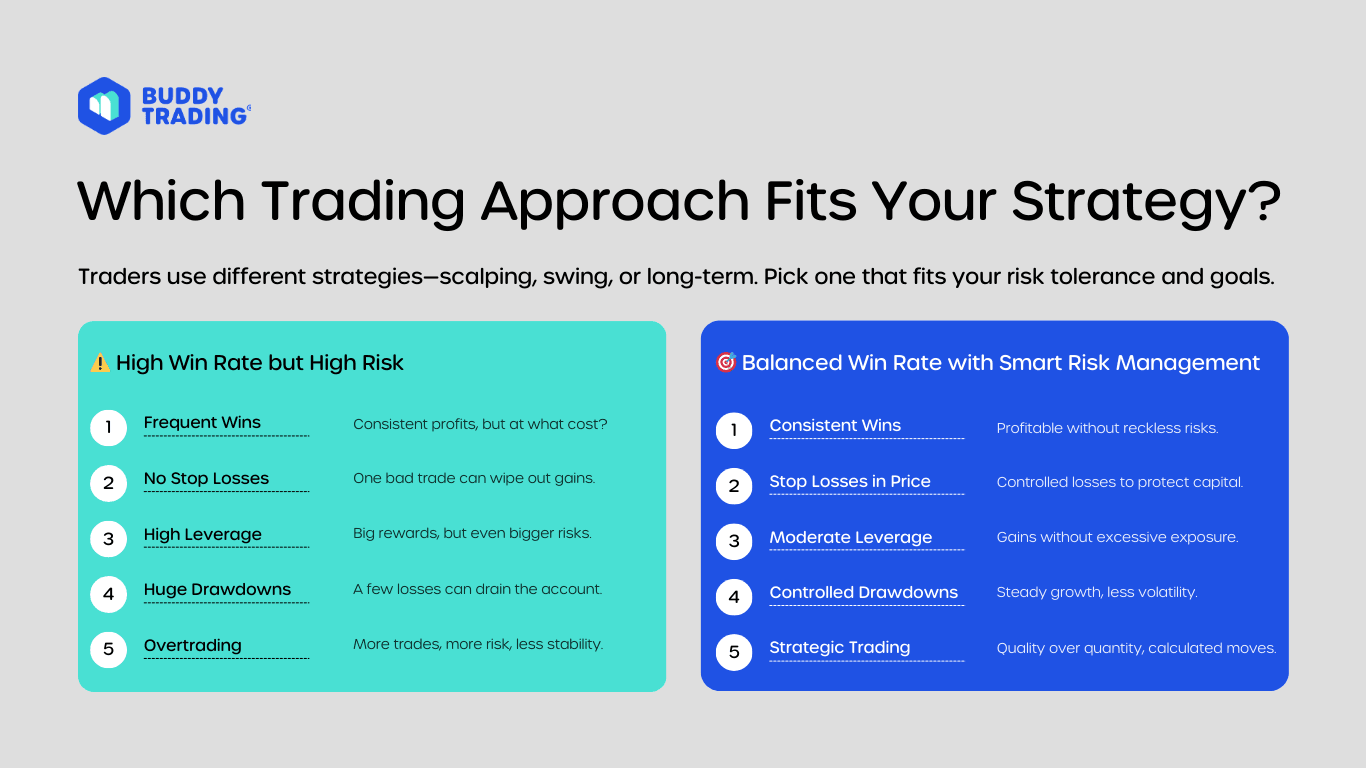
A trader who only trades a single asset, like Bitcoin, might be overly exposed to market volatility. Diversification across different assets (crypto pairs, forex, stocks) shows a more balanced approach to trading. Traders with exposure to multiple markets can often navigate downturns better, as they have opportunities to profit from various asset classes instead of relying on one market's performance. Additionally, traders who diversify their strategies—using both short-term and long-term trades—often have more resilience in unpredictable market conditions.
Good traders are open about their strategies, past mistakes, and trading decisions. Check if they provide insights into their trades or if they frequently adjust their strategies based on market conditions. Transparency builds trust and helps you learn as you copy their moves. Some platforms allow traders to share detailed trade logs or commentaries—favor those who take the time to engage and explain their reasoning. If a trader never discusses losses or strategy changes, it could be a sign that they are not being fully transparent about their trading performance.
While popularity isn’t everything, a trader with many engaged followers usually indicates reliability. However, don’t blindly follow the crowd—always verify the trader’s actual performance and strategy before committing. Sometimes, traders gain followers due to aggressive marketing rather than solid results, so look beyond social proof and dive into actual trading data. Pay attention to the quality of discussions around a trader’s profile—are followers asking insightful questions, and is the trader responding with valuable information?
The best traders maintain emotional discipline even during market turbulence. Analyzing how a trader reacts to losses—do they revenge trade or stick to their plan?—can reveal a lot about their long-term success potential. Consistently profitable traders follow well-defined strategies without letting emotions dictate their decisions. You can often assess this by looking at their trading history—do they take sudden large trades after a loss, or do they maintain their strategy regardless of recent outcomes?
Markets evolve constantly, and a trader who succeeded in one market condition may struggle in another. Look for traders who have proven their ability to adapt to different market phases—bull runs, bear markets, and sideways trends. If their success is limited to a single type of market movement, their strategy may not be reliable in the long term. The ability to adjust strategies based on market conditions, rather than stubbornly sticking to one approach, is a strong indicator of an experienced trader.
Another overlooked factor when selecting a trader to copy is their trading frequency. Some traders execute multiple trades daily, while others take a more measured approach with fewer but higher-quality trades. If a trader has an extremely high trading frequency, it’s important to assess how trading fees impact overall profitability. High-frequency trading can be lucrative but may also incur significant transaction costs, which can eat into profits, especially on platforms with higher fees.
A responsible trader understands the importance of using stop losses and take profit levels to manage risk. Reviewing their historical trades to see whether they actively use these tools can give you confidence in their risk management practices. Traders who consistently allow trades to run indefinitely without predefined exit points may expose themselves—and their copiers—to unnecessary risks.
Choosing the right trader to copy isn’t about chasing the highest returns. It’s about consistency, risk management, adaptability, and transparency. Take your time to analyze these key metrics and select a trader who aligns with your financial goals and risk appetite.
With BuddyTrading, you can access real-time stats and in-depth trader profiles, making it easier than ever to find the right leader to follow. Start exploring today and make smarter, more informed copy-trading decisions!
📢 Join the BuddyTrading community today!
📢 🌐 Visit us at:buddytrading.com
🐦 Follow us on X:@BuddyTradingApp
🚀 Stay ahead in the copy trading game with expert insights & real-time updates!

Subscribe to our newsletter and be the first to access exclusive content and expert insights.



 7 min read