The practical, link-rich rundown of Pionex, Bybit, OKX, Coinbase, and Binance native bots, what each offers, who it’s for, and step-by-step actions to go from reading to running with guardrails.
1. Exchange‑Native Bots
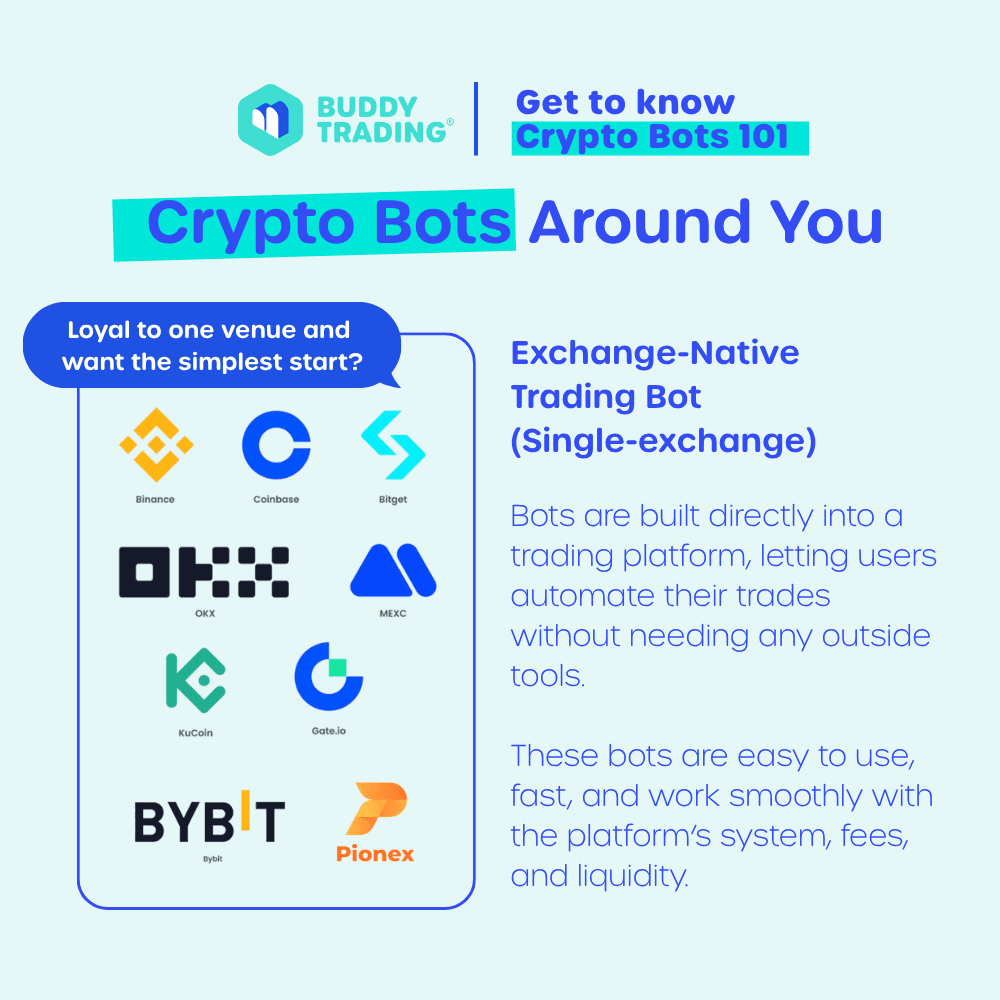
In the broader “bot ecosystem” you can think of three major hosting models (we covered SaaS bots in the previous piece). Exchange‑native bots are the second lane: bots built directly into a single exchange’s infrastructure rather than being run by a third‑party cloud platform. These bots offer seamless integration, often lower friction, and sometimes fee perks—but also come with trade‑offs.
Why they matter:
If you already trade on one exchange and want automation without leaving it, this lane makes sense.
Since everything runs within one platform, it can simplify operations (one login, one wallet, one API layer).
For creators and affiliate partners, these bots can also have built‑in incentive systems (referrals, native listing) that plug into the exchange’s user base.
In this post we’ll dive into some of the major exchanges offering bots, what kinds and how many bots they provide, how they differ, and what to watch for when you choose.
2. What Are Exchange‑Native Bots?
Rather than a separate infrastructure or marketplace like 3commas, cryptohopper, these bots are embedded as features of a single exchange. You typically:
Log into your exchange account
Navigate to “Trading Bot” or “Automated Trading” section
Connect accounts/KYC as required
Choose a bot type (Grid, DCA, Martingale, etc)
Set parameters (investment size, range, intervals)
Deploy on a specific trading pair within the exchange
Because the bot runs inside the exchange ecosystem it often benefits from native data, deep liquidity, and sometimes lower fees. However it is locked‑in to that exchange’s ecosystem and doesn’t always allow multi‑exchange spread or cross‑venue strategies.
3. Top Exchanges & Bot Types
Here are some of the leading single‑exchange platforms offering bots, with links and key types:
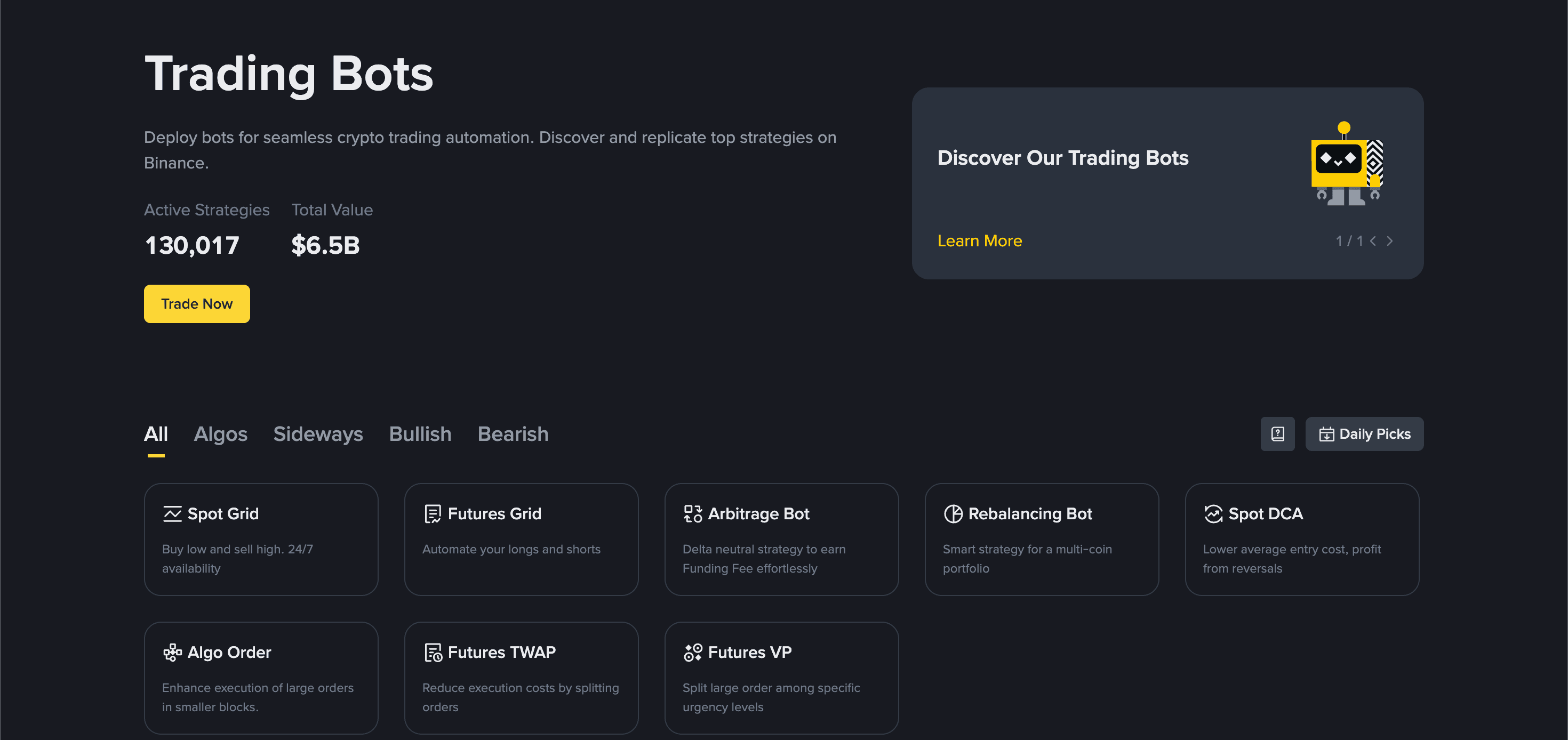
One of the most extensive built‑in bot menus on an exchange.
Supports both spot and futures bot strategies.
Good for users who already use Binance as their primary venue. Competitive difference: Depth of bot types, massive user base, strong liquidity support.
You’re tied to Binance only; cross‑exchange arbitrage or diversification is limited by the single‑venue model.
Crypto Bot 101: Native Exchange Trading Bots - The 2026 Guide | BuddyTrading Blog
UI designed for relatively advanced traders (multi‑asset, futures grid). Competitive difference: Good choice if you trade derivatives/futures and want bots built into a derivatives‑heavy exchange. Considerations: As with all single‑exchange bots, your wallet is in that platform; also ensure you are comfortable with the exchange’s product suite and risk profile.
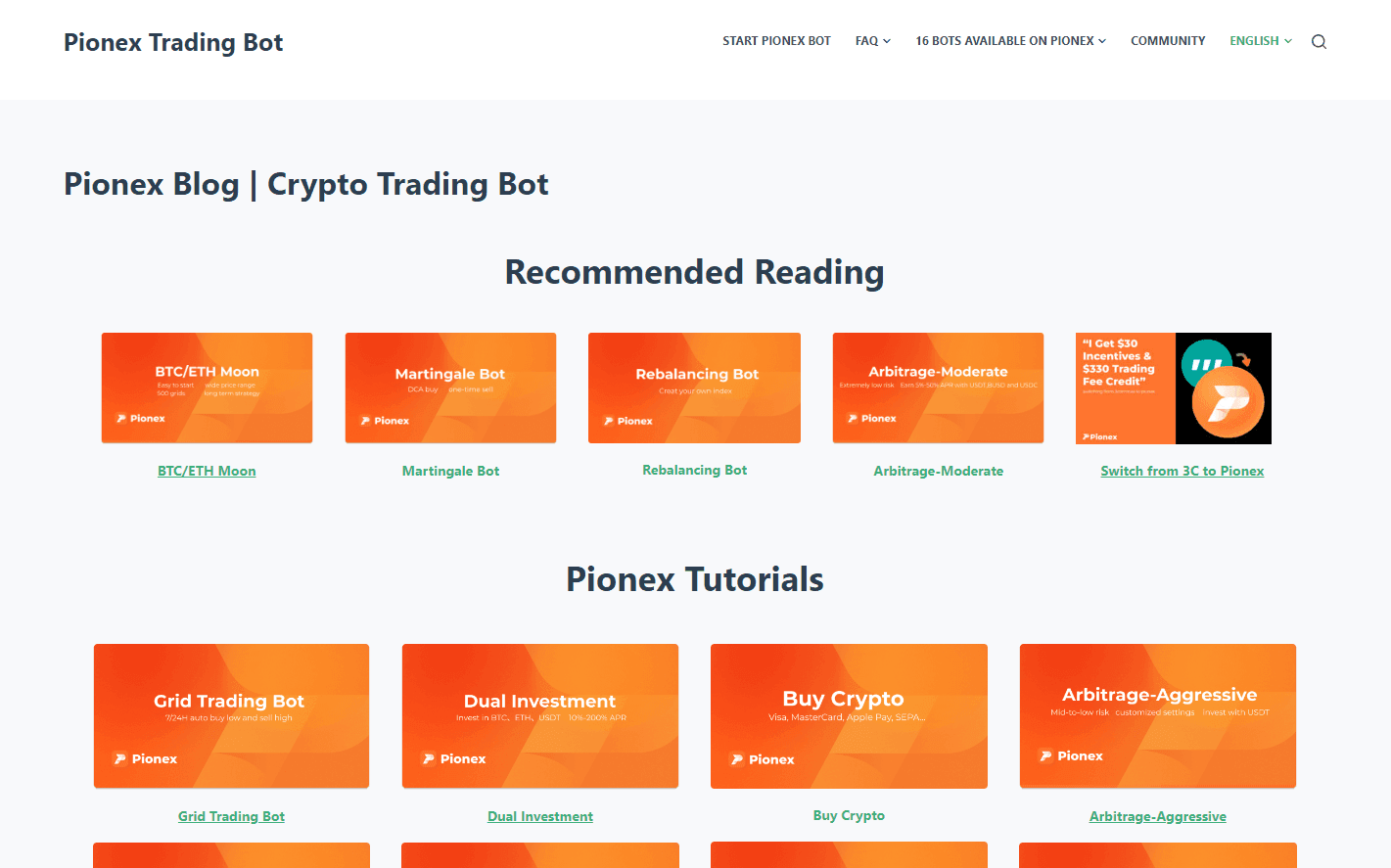
Built‑in bots at no extra monthly cost (just pay trading fees), rich resources on Pionex's blog
Designed to onboard users with little strategy experience, yet still offers multiple bot types.
Competitive difference: Free bot access, multiple bot types, simple UI for users who want automation without third‑party. Considerations: Because it’s single‑exchange, you still face lock‑in; also some strategies may be simplistic versus specialized bot frameworks.
Emerging exchange with built‑in bots attractive for smaller traders
Note: For each link of these, check “Automated Trading” or “Trading Bot” section on the exchange site for exact bot types.
4. What Distinguishes Each Exchange’s Bot Offering?
Here are the key competitive differences – what sets one exchange’s bot suite apart from another:
Breadth of bot types: Binance offers many (spot, futures, rebalancing, auto‑invest, etc). Pionex a smaller but still diverse suite.
Price/fee model: Some bots come free with the exchange (Pionex), others may include premium tiers or tie‑ins.
Market coverage: Some bots are only for spot markets, others extend to futures and margin. Bybit excels in futures automation.
Ease of use vs customization: Some bots assume beginner templates (Pionex), others allow more parameter tweaking (Bybit, Binance).
Ecosystem lock‑in: Because you’re using one exchange, you trade off flexibility. If you want cross‑exchange strategies you may lose out.
Affiliate/referral & monetization: Some exchanges give referral perks for bots; if you’re a creator this can matter.
Liquidity & execution: Exchanges with larger volume (Binance, Bybit) may offer tighter spreads, better fills for automated bots.
5. Use Case Examples & Who Should Use What
Beginner trader
If you’re comfortable trading on one exchange, want simple bot set‑and‑forget, and prefer low setup overhead: go for Pionex or KuCoin built‑in bots.
Intermediate trader
You already trade on an exchange (spot or futures) and want automation without external infrastructure: use Binance’s single‑exchange bot options.
Advanced trader/creator
You trade derivatives, need multi‑bot management, large capital, and want to deploy multiple strategies: a strong exchange‑native option is Bybit (especially if futures). But remember: if you want multi‑exchange spread, single‑exchange is inherently limiting.
6. What to Watch / Risk Checklist
Exchange lock‑in: You’re tied to that exchange’s wallet, product suite, and risks.
Bot performance transparency: Even built‑in bots need back‑testing, paper testing, and live monitoring.
Execution quality: The bot feature may be official, but you still face slippage, deep liquidity issues, and backend execution risk.
Fees and hidden costs: Some bots add extra costs or require margin/futures exposure (especially on futures‑heavy exchanges).
Security of exchange: Your funds are on the exchange; the bot is just a feature. Exchange risk = your risk.
Strategy‑market‑fit: Some bots (grid, DCA) work best in certain regimes (sideways, trending) – don’t assume a bot works in all conditions.
7. TL;DR
Exchange‑native bots are fully built‑in automation tools offered by a single exchange.
They’re ideal if you already use that exchange and want minimal setup.
Key trade‑offs: you are locked into that venue; you may miss cross‑exchange flexibility; you’ll want to check bot types, fees, and execution quality carefully.
If you want speed and lower friction in your current exchange, this lane is hard to beat. But if you later grow or need diversification, you may out‑grow the single‑exchange model.
What's Up Next in the Series ?
Cloud‑Hosted SaaS (already published)
Self‑Hosted / Open‑Source Bots (coming)
Metrics That Matter: ROI, Drawdown, Expectancy
Strategy Publishing & Marketplace Monetization
But if you store assets in multiple venues, want more customization?
Connect your exchange in minutes with a secure API (read + trade only, never withdraw), then build your own bot or copy a proven one, all in one place on BuddyTrading.
Subscribe to our newsletter and be the first to access exclusive content and expert insights.
Explore the architecture of automated trading. Learn how market making works, the history of algorithmic execution, and why cheap crypto bots are often scams. A deep dive into the automated trading ecosystem and see how Buddytrading secures your edge.

 Our Blog
 7 min read

 Dec 13, 2025